A customer wants to use data from your packaging machine in its own production software. It needs cycle times, machine states and pressure readings. It also wants to send a maintenance company the records around a stoppage. The readings exist. Which file contains them, what do the values mean, and who can authorize delivery?
Preparing for the EU Data Act means making that request workable. Viewing a chart and using the underlying data in another system are different customer needs. Machine builders should account for both in product design, sales terms and service procedures.
What actually changes in 2027?
The Data Act has applied generally since 12 September 2025. Switching charges for covered cloud services end on 12 January 2027. Other dates address machine-data access and contract terms.
| Date | What it concerns |
|---|---|
| 12 September 2025 | General application, including the framework for switching data-processing services. |
| After 12 September 2026 | Article 3(1) access-by-design duties for connected products and related services placed on the market after this date. |
| 12 January 2027 | Switching charges, including necessary data-egress charges, end for covered data-processing services. |
| 12 September 2027 | Unfair B2B contract-term rules extend to certain older indefinite or long-running contracts. |
The European Commission’s Data Act overview separates these milestones. Access to connected-product data and switching a data-processing service are separate obligations that may affect the same industrial project.
Define what the customer needs to use
Ask what the data will help the customer do. Investigating a stoppage may require pressure readings before and after the event. Comparing shifts may require counts, machine states and the shift boundaries. A request for “all machine data” becomes easier to handle when the intended use is clear.
Document each field. Does a counter contain a running total or the output since the previous reading? Does it reset when the controller restarts? Is a temperature a setpoint or a measurement? Does a blank mean a sensor fault or an absent record? These distinctions determine whether another system can calculate a useful result.
The connected-product rules concern covered raw and preprocessed data and the metadata needed to interpret it. An enriched analysis or AI report has a different role from its source measurements. The Commission’s explanatory guide explains that distinction and the conditions for sharing.
Worked example: pressure loss on a packaging machine
Consider an illustrative request for a twelve-hour night shift. The customer wants pressure readings, machine states and the stoppage time for its maintenance provider. A five-second sampling interval would produce 8,640 readings over twelve uninterrupted hours. If the export contains fewer records, the missing intervals need an explanation.
Include the machine identifier, measurement name, timestamp, time basis, unit and value. Deliver the field definitions with the file. Have the maintenance provider load it into its own tool and locate a known stoppage. Check that a counter reset or a missing interval cannot silently become a production loss in its calculations.
Match permissions to the task. Reviewing historical pressure does not require permission to change a PLC value. If a file delivery meets the request, continuous access adds no value. If the provider needs a live application, identify the resource it may reach and the person responsible for removing access.
When does the 30-day switching period start?
For covered services, the standard transition must finish without undue delay and within 30 calendar days after the notice period ends. The contractual notice period cannot exceed two months. Defined technical circumstances and customer requests can permit extensions. Receiving a switching email does not automatically start a single 30-day clock.
Article 25 distinguishes notice, transition and retrieval. It also provides for at least 30 calendar days to retrieve data after the transition period ends. Put these dates into the contract and the actual handover schedule.
The exit plan should cover more than preparing a file. Record when the destination system will receive it, how access details will be supplied, who will validate the historical records and when deletion is due. The customer needs a usable transfer with a clear sequence of responsibilities.
Check the handover in another system
A large export is not evidence of a successful handover. The recipient must be able to identify each machine, interpret time correctly and use the values in its own calculations. An example output, field definitions, retention period and documented access method give sales and service teams something concrete to discuss before delivery.
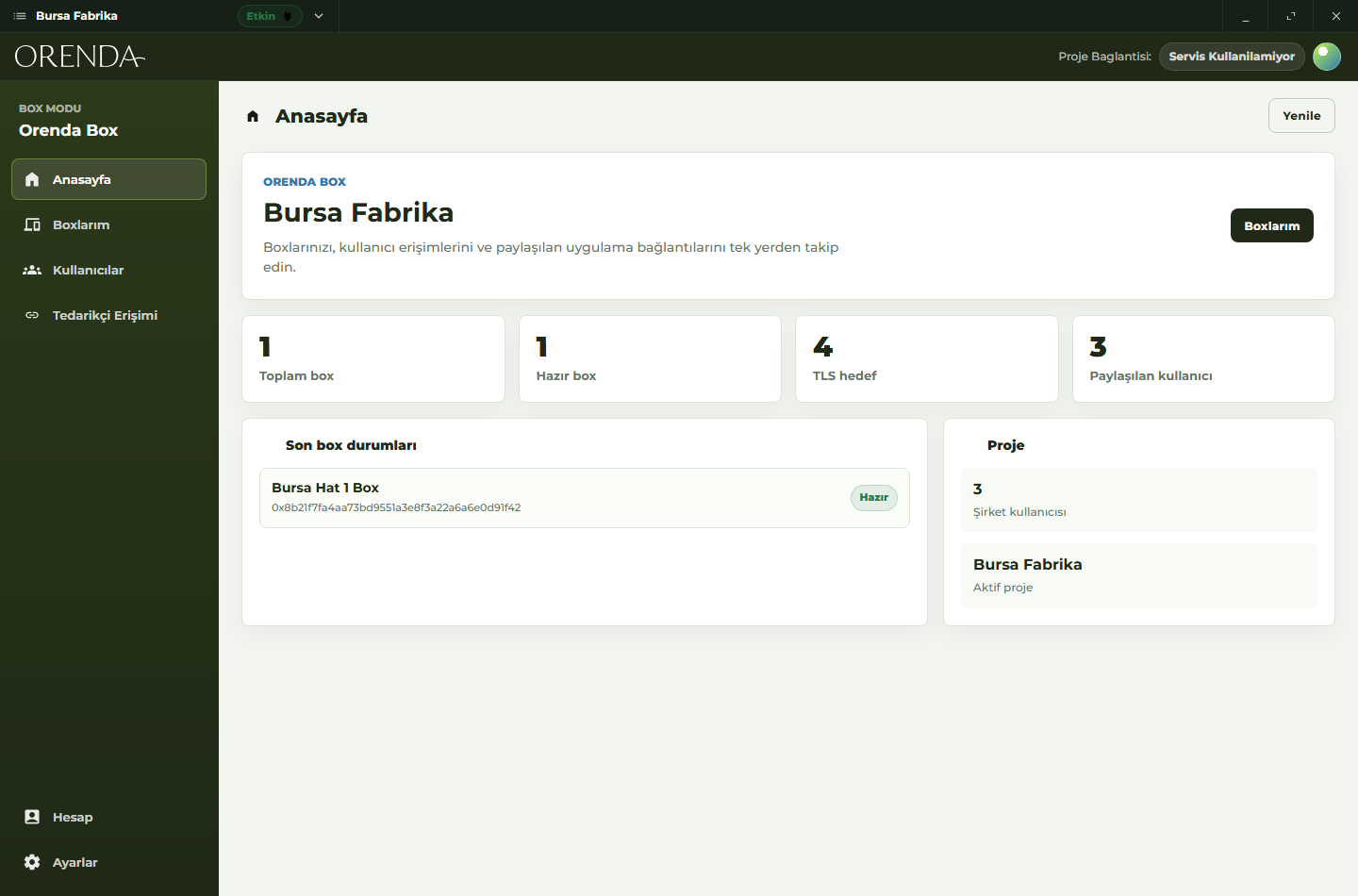
Orenda Box collects configured machine data on site. MES and SCADA use it for production and monitoring. Your data stays yours: Orenda provides open APIs and standard export formats, with no data exit fees. Orenda Connect gives authorized people access to selected resources.
Bring the customer’s requested fields, an existing sample and the destination system to a machine-data discussion. Together, we can define what will be delivered, how the recipient will use it and who owns each step.