See where the automotive job lost time.

The press is running and assembly is moving. Why is the order still behind? Connect each part to setup, downtime and inspection records.

What the production total leaves out

One automotive machine may produce several part variants in a shift. Its total output cannot explain a die change, an adjustment or a wait for first-part approval. Orenda MES keeps the product and work order with the production run so the team can investigate the job that missed its target.

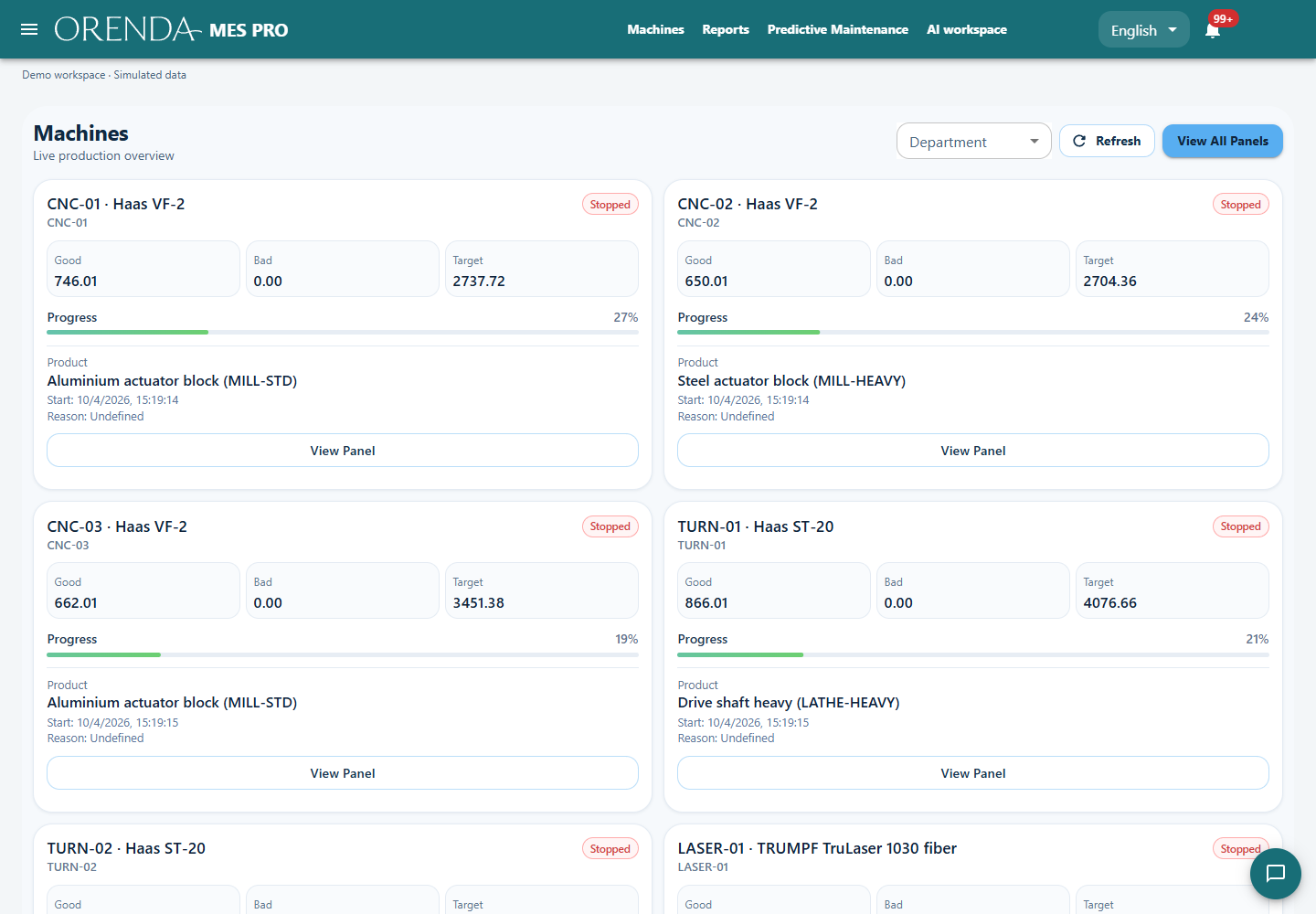
Actual Orenda application with simulated production data
Actual Orenda interface · Simulated data

Follow the time before the first accepted part

When the operator changes jobs, the selected product and work order change too. Separate setup, adjustment and inspection waiting in the stop record. This lets the team distinguish a production change from an equipment fault.

Two runs can produce the same quantity while one takes 25 minutes longer to set up. The next discussion should then focus on the changeover steps, not only on machine speed. Compare the same part and similar working conditions before drawing a conclusion.

Keep inspection findings with the production job

Quality plans, inspection results and defects are more useful when they identify the product, work order and machine. These records let production and quality review which job had the repeated dimensional issue and compare it with the earlier inspection.

Maintenance can inspect the corresponding machine states in SCADA. A repeated defect becomes a specific period and equipment question to investigate, with the production record available for follow-up.

Illustrative comparison: equal output, different losses

Compare setup time in these two illustrative runs of the same part.

Illustrative comparison: equal output, different losses
RecordQuestion to investigate
Same part and completed quantityWere the planned time and operating conditions comparable?
An extra 25 minutes of setupDid die change, adjustment or approval take longer?
Another adjustment after first-part inspectionDoes the method or tooling need attention?

Agree who will investigate the delayed changeover step, then compare its duration on the next run of the same part.

See the application with your team’s questions in mind.

Show us the report you use today and the part of production it does not explain. We can demonstrate the relevant screens and discuss the machine connections and modules for your setup.