Make the textile counter and the order describe the same work.

Read meters, rolls and pieces correctly. Review speed and downtime against the product and order actually running.

What the production total leaves out

Weaving, finishing and cutting use different production units. A product change can also change the expected speed and operation time. MES keeps the order, product and machine together so the team can interpret what the counter measured.

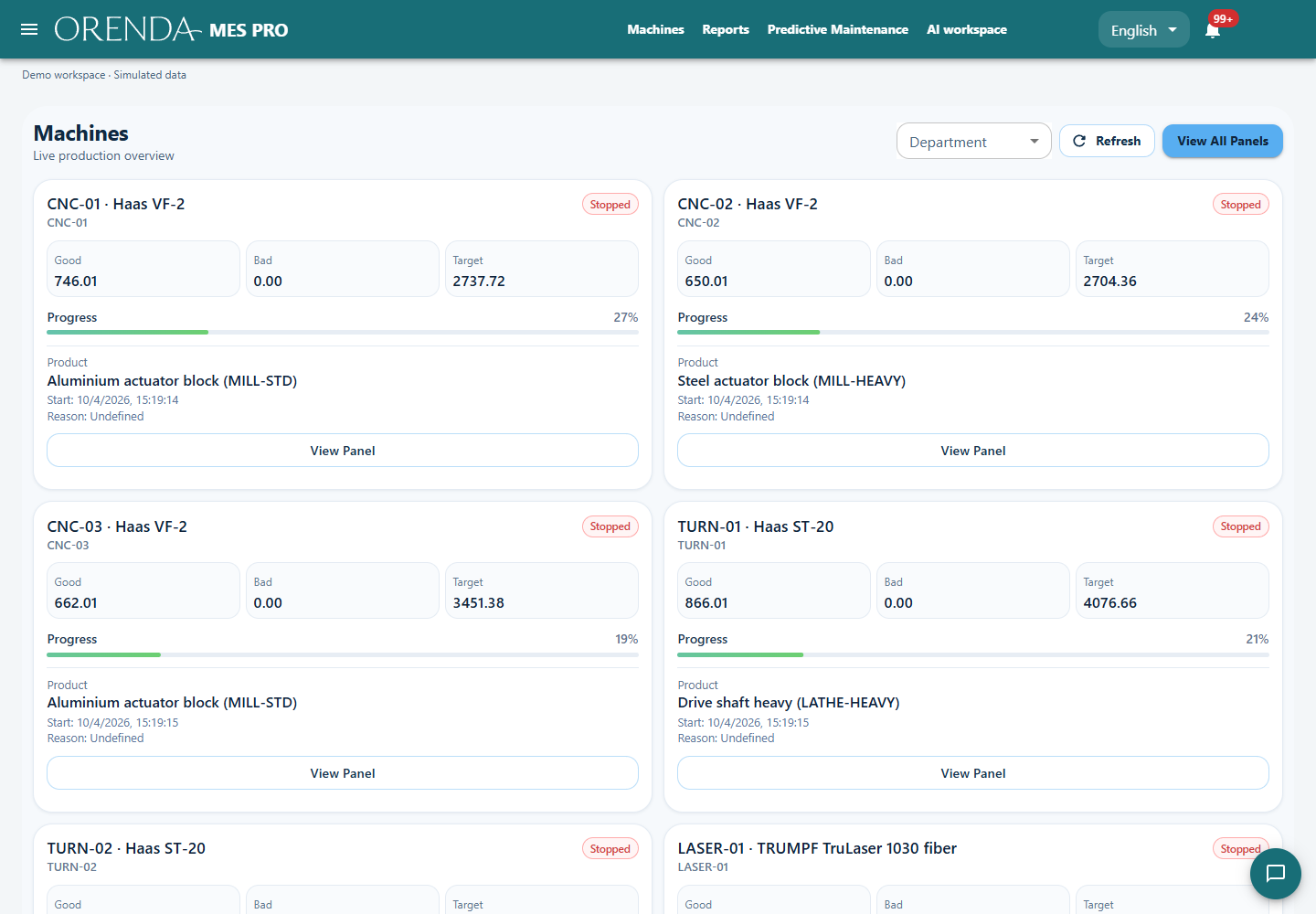
Actual Orenda application with simulated production data
Actual Orenda interface · Simulated data

From the length counter to the shift report

Encoder length, completed rolls and accepted fabric are different records. Understand what happens at a counter reset, roll change or repeat operation. Compare those events with the operator’s record during setup.

A lower length total may reflect a product that requires slower running, shorter orders or longer preparation. Identifying the orders and their run times helps the team decide whether to investigate machine speed or preparation time.

Use reasons the operator can recognize

Material waiting, product change, adjustment and equipment problems need different follow-up. Use the situations the operator can distinguish on the machine instead of a long list of abstract codes.

Repeated equipment stops can become a maintenance investigation. After the work, compare similar products and operating conditions to see whether the problem continued. This connects the closed work order to the machine result.

Illustrative comparison: two shifts, different products

When one shift produces fewer meters, examine these differences.

Illustrative comparison: two shifts, different products
ObservationQuestion
Lower meter outputWere the product and planned operating time the same?
More roll changesHow did order length and preparation time change?
A counter resetDid the new record begin against the correct order?

The records help distinguish a machine-speed issue from a production-planning issue.

See the application with your team’s questions in mind.

Show us the report you use today and the part of production it does not explain. We can demonstrate the relevant screens and discuss the machine connections and modules for your setup.