Separate assembly activity from accepted output.

A second pass through a station is not another finished appliance. Review output with the work order, rework rule and inspection result.

What the production total leaves out

Assembly stations, test points and the end of the line often report different quantities. A unit can pass through a test twice while the factory has produced only one appliance. Orenda MES setup makes the completion point and rework record explicit.

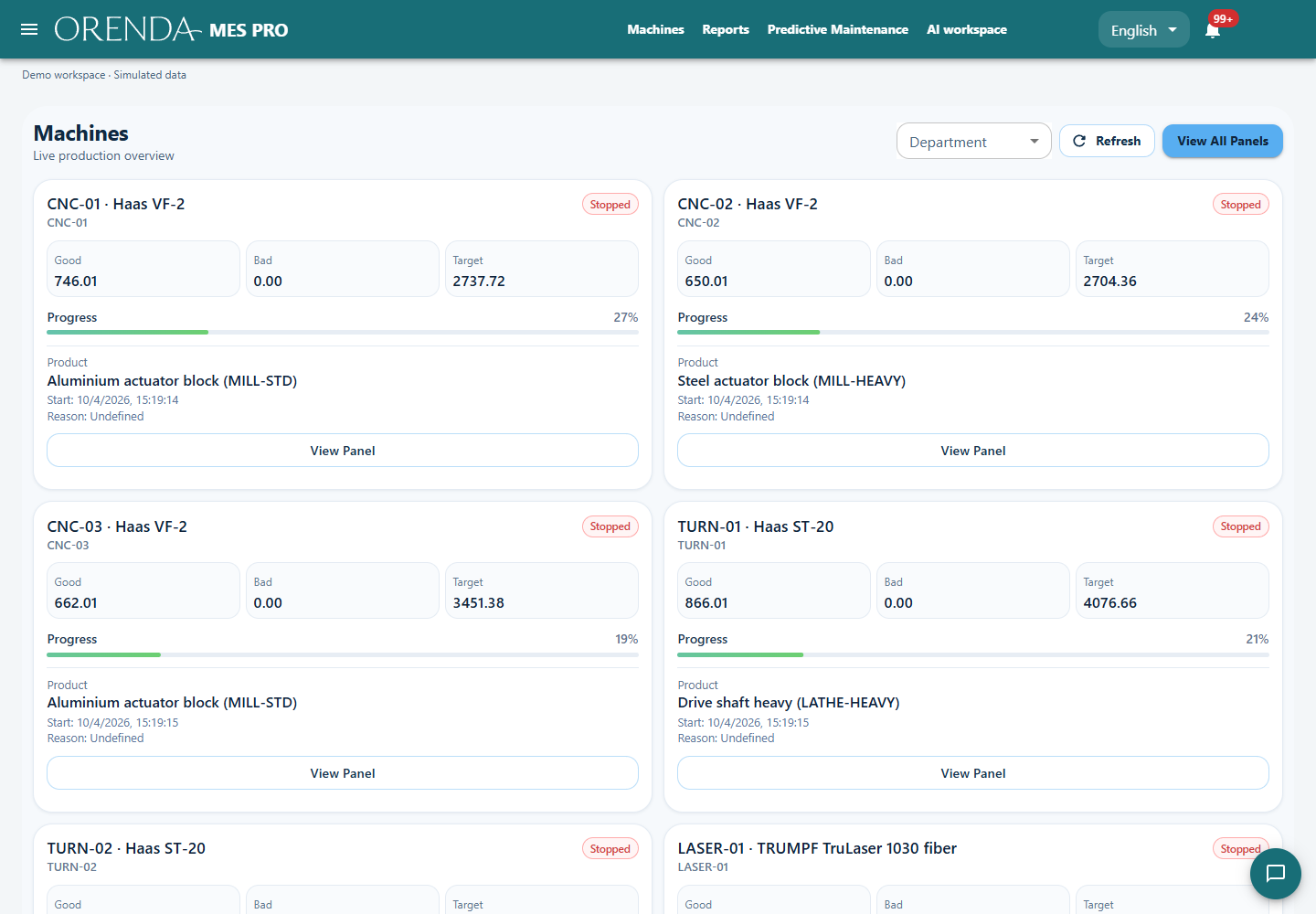
Actual Orenda application with simulated production data
Actual Orenda interface · Simulated data

Give each counter a clear meaning

An assembly station may count completed operations, a test point may count attempts, and the line end may count accepted units. Adding those counters can overstate production. Link each counter to its workcenter and agree which quantity is compared with the order.

A different appliance variant may also need a different operation time. Keeping the product and order with the run helps the team compare the actual work rather than applying one speed target to every model.

Find the station that needs a different action

Material waiting, repeated adjustments and inspection returns require different responses. Recorded stop reasons let the production manager direct the next task to logistics, maintenance or quality.

Production and inspection records can then be reviewed together. The weekly report can explain where rework accumulated and which jobs were affected instead of presenting a line total with no account of the loss.

Illustrative example: 1,060 passes are not 1,060 appliances

A station processes 1,000 distinct units and repeats an operation on 60 of them.

Illustrative example: 1,060 passes are not 1,060 appliances
QuantityMeaning
1,060 station passesFirst operations plus repeat passes
1,000 distinct unitsThe production quantity to reconcile
980 accepted, 20 rejectedThe inspection outcome

Report the 1,060 station passes separately from the 980 accepted units. Use rework and rejection records to explain the difference.

See the application with your team’s questions in mind.

Show us the report you use today and the part of production it does not explain. We can demonstrate the relevant screens and discuss the machine connections and modules for your setup.