What kept the filling line waiting?

Separate cleaning, product changes, material waits and equipment faults. Review the shift against how the line was actually planned to run.

What the production total leaves out

Planned cleaning is not the same as an unplanned equipment stop. Without that distinction, availability or OEE can lead the team toward the wrong improvement. Orenda MES brings the time plan, recorded stops and output into one production review.

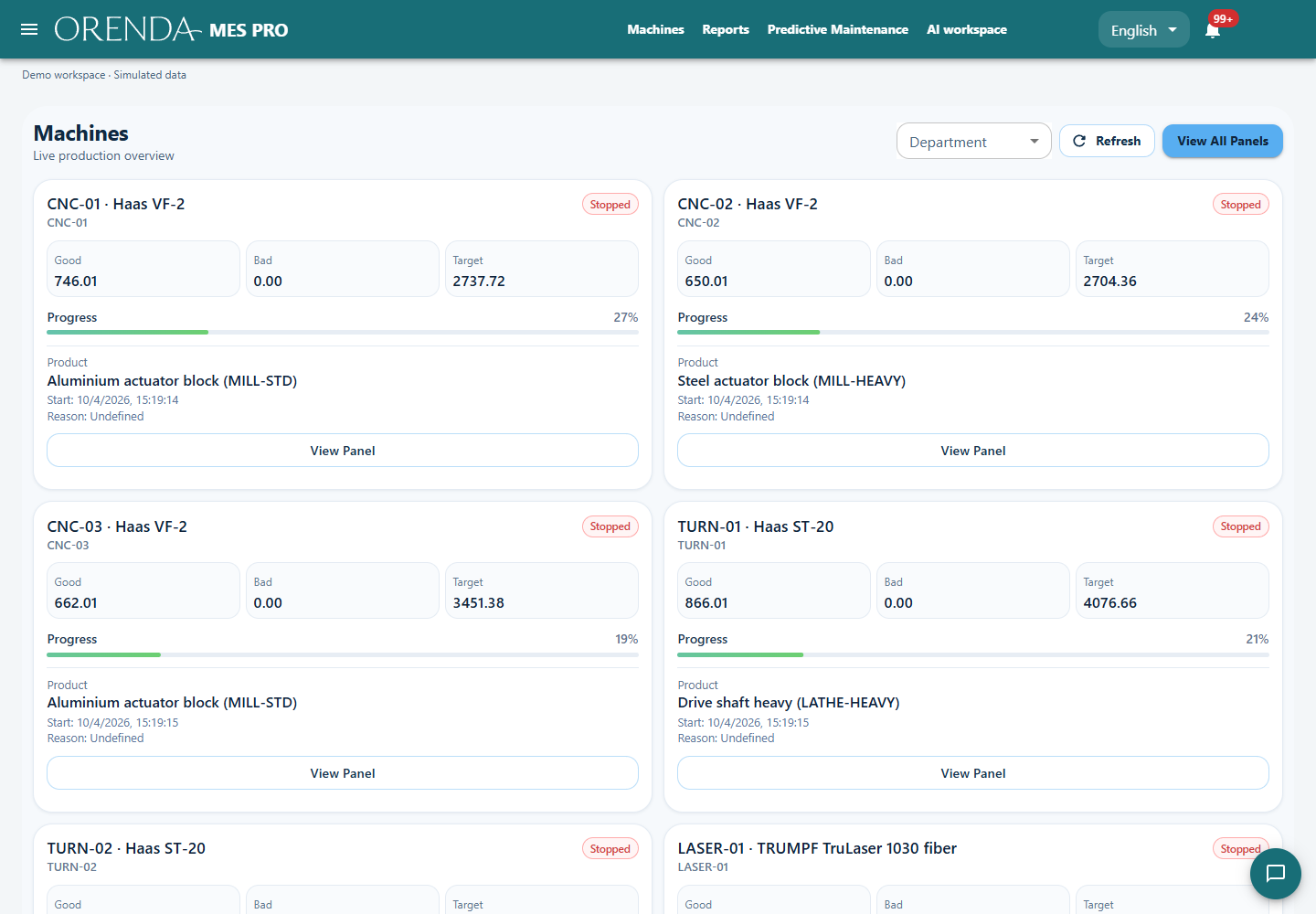
Actual Orenda application with simulated production data
Actual Orenda interface · Simulated data

Define planned time before calculating the result

If cleaning is outside planned production time, apply that rule consistently. A product change within planned time needs its own reason in the record. Do not change the denominator each week to make the result look better.

The line manager can then review the work that makes up the lost time. Reducing material waiting and changing a cleaning schedule involve different teams and decisions. The report should preserve that difference.

Read filling output with the process conditions

Reconcile the configured counter with accepted and rejected units. Keep different products or packs with their production runs. A lower count for a slower product does not by itself show that the equipment deteriorated.

Available temperatures, levels and machine states can be shown in SCADA. When a filling stop repeats, review those values over the same period. Production and maintenance can investigate one event instead of working from a general complaint.

Illustrative example: account for an eight-hour shift

In this example, one hour was reserved for planned cleaning.

Illustrative example: account for an eight-hour shift
PeriodMeaning
60 minutes planned cleaningHandled according to the agreed production-time definition
30 minutes waiting for packagingA material-flow loss to investigate
15 minutes equipment downtimeA maintenance event

A useful report identifies the next team and action, as well as the percentage.

See the application with your team’s questions in mind.

Show us the report you use today and the part of production it does not explain. We can demonstrate the relevant screens and discuss the machine connections and modules for your setup.