The technician completes a maintenance work order. The machine returns to production. The team still has one question: did the original issue change?
Keep that question connected to the work record. A clear follow-up prevents the next engineer from repeating the investigation without knowing what was already done.
Keep three records distinct
The finding describes the observed change. The work order describes the agreed task and what was performed. Verification describes what the later evidence shows.
Link these records. Do not use a completed task as the only evidence that the machine issue is resolved.
| Record | Main question | Useful content |
|---|---|---|
| Finding | What changed? | Machine, period, signal, supporting source |
| Work order | What did the team do? | Task, component, date, technician observation |
| Verification | What happened afterward? | Comparable period, inspection result, remaining question |
Record what the technician actually found
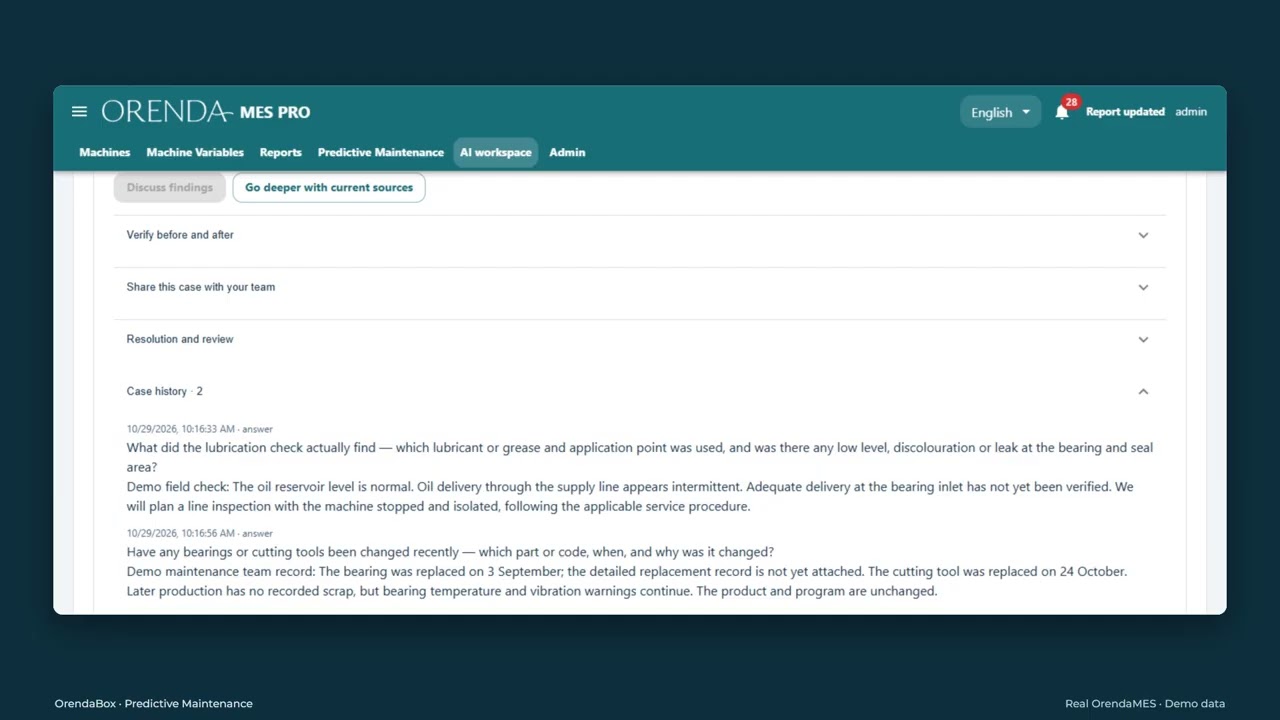
A note such as “checked lubrication” leaves important questions open. Record the relevant observation and the part of the machine examined.
For example, a normal reservoir level does not itself confirm that lubricant reached the point under investigation. Keep the observation specific. Follow the machine’s approved service procedure for the physical work.
Record replacements and calibrations with dates. A new sensor or component can change which earlier measurements are suitable for comparison.
Choose a fair follow-up period
Use the same product or operating regime where possible. Record load, speed, and other relevant conditions. A different product may explain a changed measurement.
Check whether enough new operating data exists. If the machine has not run, verification may still be pending. If the required sensor is unavailable, record the missing source.
Avoid a convenient average that combines unrelated conditions. A smaller, clearly defined comparison is easier to inspect.
Check more than one symptom when needed
Suppose scrap improves after a tool change, but temperature alarms continue. This illustrative situation contains two different observations.
The quality result may support the effect of the tool change. It does not automatically explain the temperature alarm. Keep the remaining issue open and review the appropriate evidence.
A useful follow-up can therefore be partial or inconclusive. Record which question was answered and which still needs work.
Keep history available for the next case
A recent signal window may cover only a few days. The relevant repair could be much older. Retain the service history and stable equipment identity so the earlier event remains findable.
Orenda can use retained selected-machine history alongside recent measurements. External maintenance records need an agreed integration mapping. Confirm asset identity, source revisions, and available fields before relying on imported history.
Use Orenda for the handoff
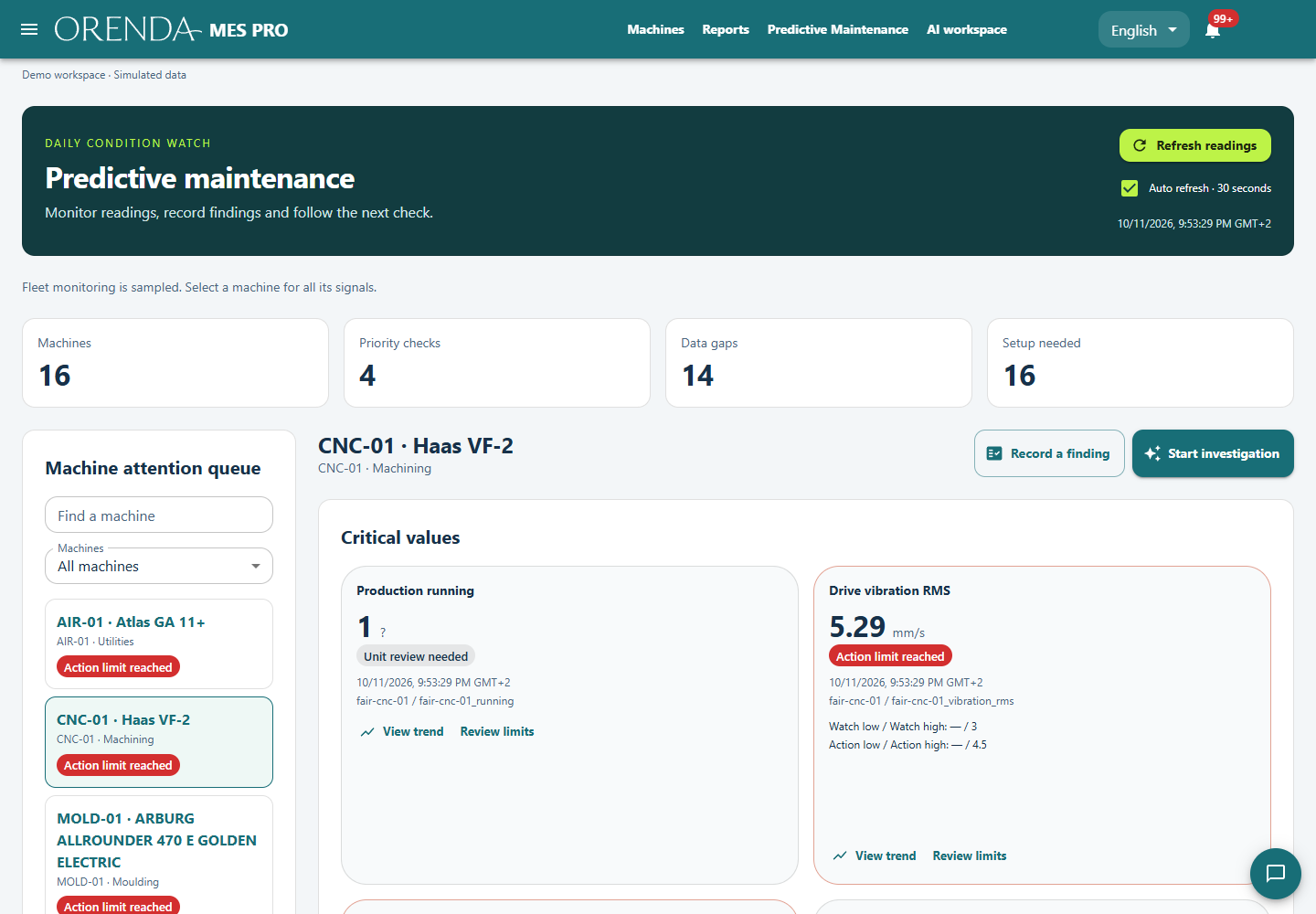
The Predictive Maintenance workspace brings authorized measurements, records, and manuals into an investigation. The team reviews a proposed action before creating maintenance work through the installed modules.
Maintenance management holds equipment, preventive schedules, work orders, and service history. Keep the completed task linked to its follow-up.
For the first workflow review, bring one completed order and the issue that caused it. Identify the observation, the later operating period, and the evidence needed to close the case.